


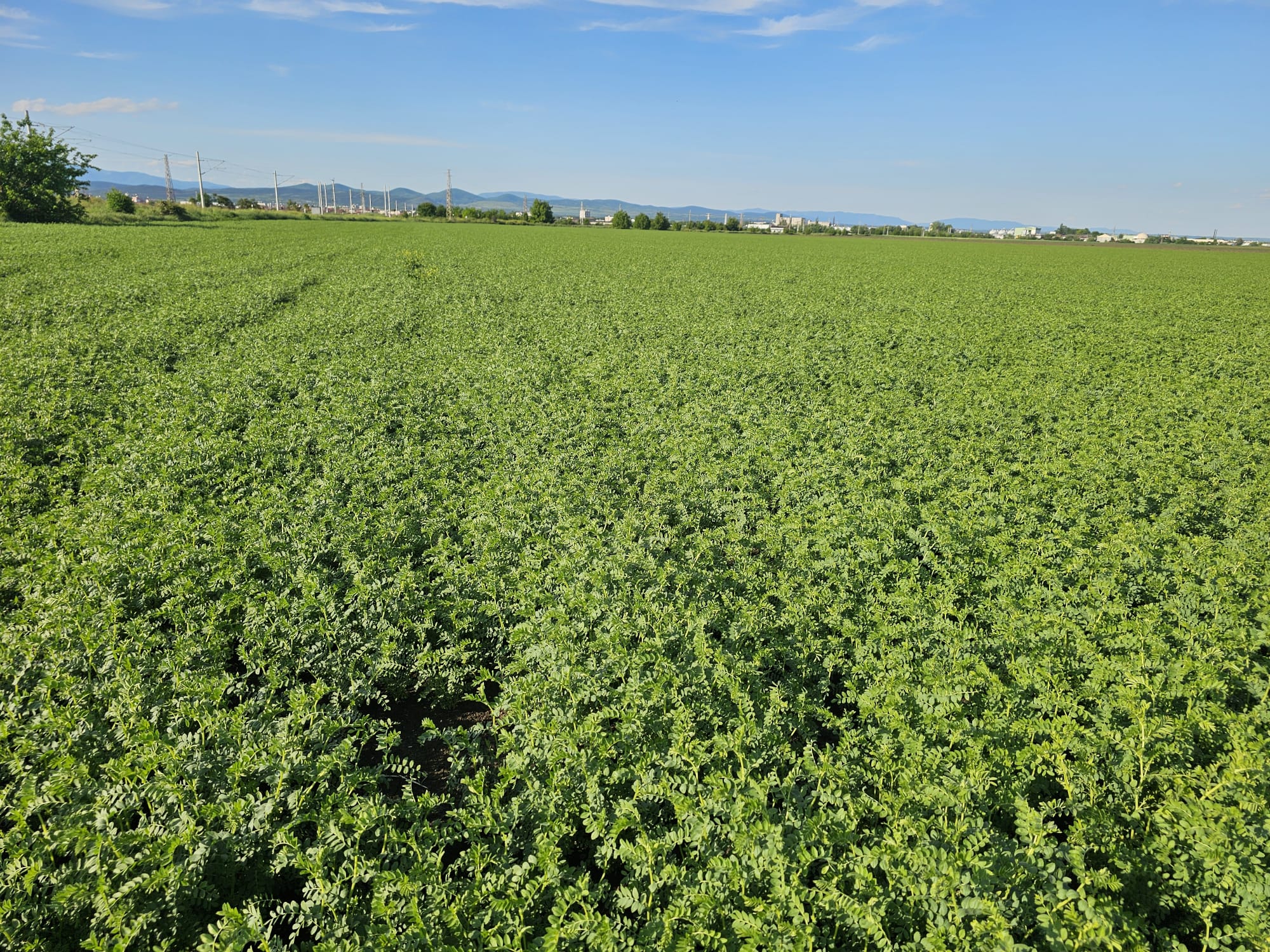
Managing a chickpea field during the growing season requires careful attention to nutrition, proactive crop protection, and timely harvesting. For Bulgarian farmers, optimizing these stages is key to achieving premium quality for global trade.
Crop Nutrition & Fertilization
Chickpeas are highly efficient legumes that naturally fix atmospheric nitrogen through root nodulation. Consequently, they do not require heavy nitrogen applications; a modest starter dose of 1.5–2 kg of Nitrogen (N) per decare is sufficient to support early seedling growth.
Instead, the culture responds significantly well to phosphorus and potassium:
- Phosphorus (P₂O₅): 4–6 kg per decare, applied during autumn plowing or as a basal spring starter, to boost root and nodule development.
- Potassium (K₂O): 2–3 kg per decare in potassium-deficient soils to enhance drought and frost tolerance.
Key Diseases and Pests in Bulgaria
Bulgaria’s humid spring weather can trigger significant disease pressures. The most critical threat is Anthracnose / Ascochyta Blight (Ascochyta rabiei), a devastating fungus causing dark, concentric lesions on leaves and stems, leading to massive yield losses. Preventative fungicide treatments before flowering and choosing resistant varieties like Askan are vital.
Among pests, the chickpea pod borer (Helicoverpa armigera) is the most destructive, as its larvae bore into pods to devour developing seeds. Periodic field monitoring and targeted insecticide applications at the start of pod formation are necessary to prevent damage.
Harvesting
Chickpeas reach maturity roughly 95 to 110 days after sowing. Direct machine harvesting should begin when the plants turn a uniform straw-yellow color, the leaves drop, and the seeds rattle loosely inside the dry pods. The ideal seed moisture level for harvesting is 13% to 15%. Harvesting when the crop is too dry increases seed cracking, while high moisture leads to mold during storage.
To source or process premium Bulgarian chickpeas, check out the specialized cleaning and wholesale trade capabilities of Agrotrakia.

Leave a Reply